Case Studies
These are examples of campaigns, tasks, endeavors, and complete overhauls showing off my full range experience.
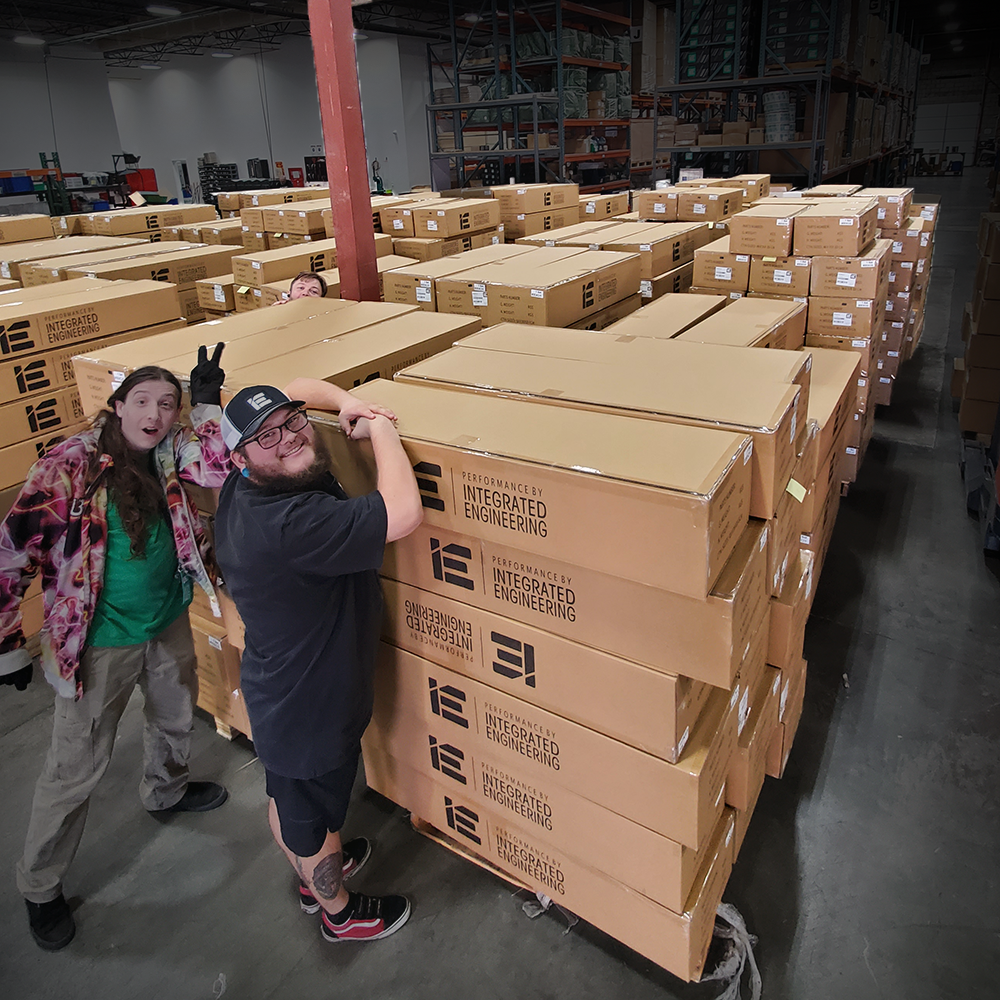
Case Study one: The Architect
Scaling Q4 Revenue to 7-Figures
Client/Company: Integrated Engineering (IE)
Role: Social Media & Paid Advertising Director
Date: November 2021
-
The objective for the 2021 Black Friday/Cyber Monday event was aggressive: drive a 30% year-over-year revenue increase while significantly improving the Return on Ad Spend (ROAS). By architecting a highly segmented, multi-channel strategy centered around the theme "Live Fast, Buy Fun" the event shattered expectations. It produced a 53.9% sales increase from the year before and generated the companies first 7-figure revenue in a single sale event. Paid media drove in 35.7% of sales at 11.92 ROAS. Paid, organic social, and email together accounted for 58% of event revenue
-
To overcome rising acquisition costs and avoid generic holiday messaging, the campaign leveraged deep CRM data to create targeted, high-conversion audience tiers:
High-Intent Retargeting: Isolated past purchasers of IE products and performance tunes, delivering exclusive upgrade paths and complementary hardware offers.
Cart Abandonment Recovery: Deployed specific ad sets targeting recent abandoners with personalized incentives, such as a lowered free-shipping threshold and combo discounts.
Top-of-Funnel Acquisition: Built high-affinity Lookalike (LAL) audiences based on the most engaged organic social segments to capture new enthusiasts.
-
The campaign relied on a synchronized deployment across Paid Media, Owned Social, and Email/SMS to create sustained urgency.
Paid Media (Meta, Google, and Other Channels): Allocated budget strategically (60% Meta, 25% Google, 15% YouTube). Creative focused on high-impact video, digital assets, and UGC (User Generated Content) showcasing real-world dyno-test results against competitors, paired with scarcity-driven copy ("Boost Your Holiday" + urgency timers + rare sales event).
Email & SMS Lifecycle: Designed a high-converting, three-stage flow:
Teasers: "Secret Early Access" routing subscribers to a segmented landing page.
Launch: Midnight activation featuring dynamic, personalized product carousels.
Urgency: "48 Hours Left" countdown targeting bestsellers.
Organic Social Integration: Primed the audience pre-launch using interactive polls ("Which upgrades are you eyeing?"), engagement posts highlighting community, and maintained momentum during the sale with a Facebook Live sprinkled in with IE employees.
-
The campaign fundamentally outperformed historical benchmarks across every tracked KPI, cementing it as the most successful sales event in the company's history at that time.
Total Revenue: Surpassed the 7-figure milestone (+37% YoY, exceeding the aggressive 30% growth target).
Direct Attribution: Drove 58% of total sales directly through managed channels (38% from Paid Ads, 20% from Organic).
Return on Ad Spend (ROAS): From 2020 to 2021, paid spend rose about 59% and paid revenue rose 46%, while ROAS held near the 12:1 target (11.92).
Email Engagement: Hit a 6.1% CTR (outperforming the 3.8% industry benchmark).
AOV: +22% from model-specific messaging
-
AOV Expansion: Implementing more personalized messaging (e.g., model specific targeting and future purchase routing based off first-party data) successfully drove Average Order Value (AOV) up by 22%.
Future Growth Levers: The initial 15% budget allocation to Other Channels revealed massive untapped markets. The data indicated that aggressively expanding User-Generated Content (UGC) on various channels, like TikTok and YouTube, would be the most efficient acquisition channel for the under-35 demographic in subsequent quarters.
Case Study two: The Proof of Scale
Scaling E-Commerce via Precision Targeting
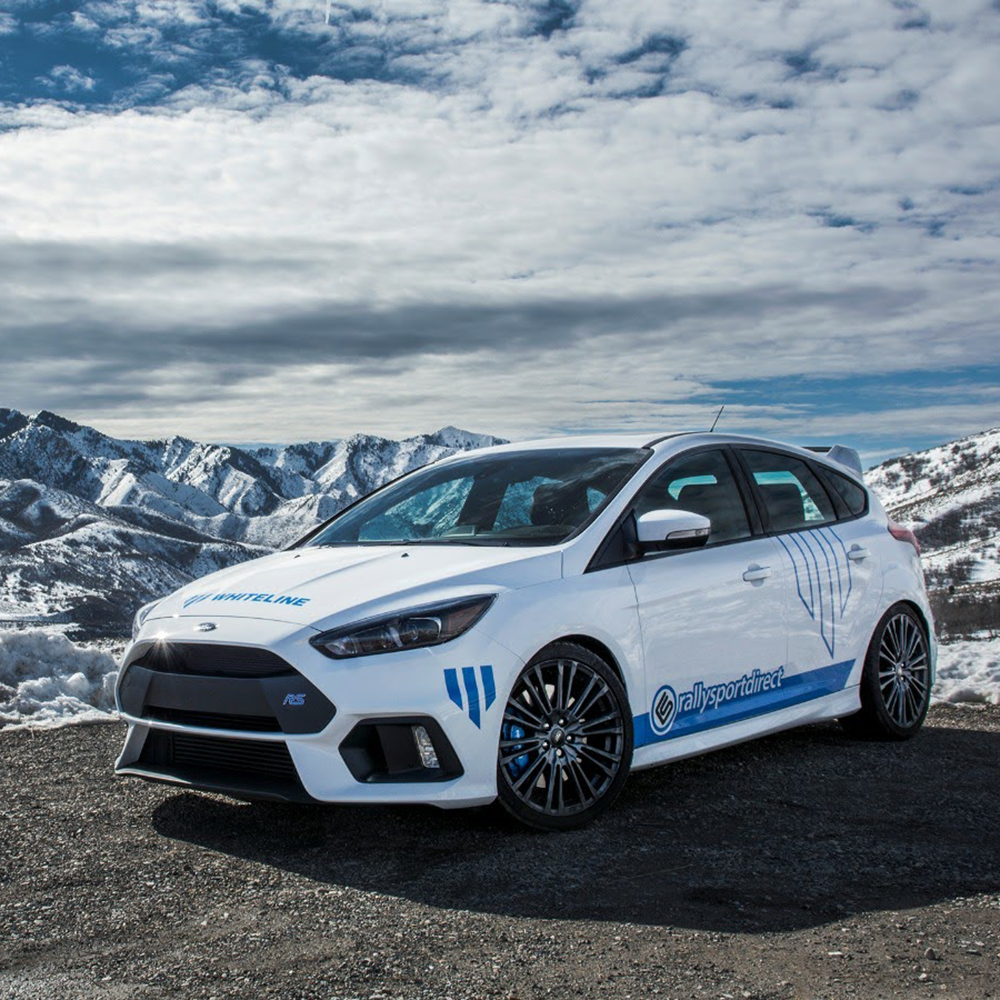
Client/Company: RallySport Direct
Role: Marketing Director / Paid Media Strategy
Date: Q2 2019
-
In the automotive aftermarket, broad targeting burns budget. Enthusiasts don't buy generic parts; they buy highly specific components engineered for their exact Year, Make, and Model (YMM). To scale RallySport Direct’s paid media profitably, we moved away from generalized automotive audiences and architected a hyper-segmented, full-funnel Meta (Facebook/Instagram) strategy.
By leveraging precise YMM data, dynamic product catalogs, and brand-specific creative, the account managed $450K+ in ad spend, reached 8.1M+ people, and held a 7-8x average ROAS.
-
Selling high-performance car parts requires extreme precision. A customer driving a 2004 Subaru WRX (GD Chassis) has zero use for parts designed for a 2015 WRX (VA Chassis).
When paid social campaigns rely on broad genre targeting, ad spend is wasted showing irrelevant products to the wrong audience. The challenge was to restructure the account to serve the right product, to the right customer, at the exact moment of purchase intent, all while scaling the overall budget to drive top-line revenue.
-
To maximize Return on Ad Spend (ROAS), the account was fundamentally restructured around a "Chassis-First" methodology.
1. Granular Audience Segmentation (The Ad Set Level)
Instead of grouping audiences by general interests, campaigns were split into specific vehicle generations. I built dedicated Ad Sets for distinct platforms, but this is simplified to show Subaru platforms:
GD YMM Targeting (2002-2007 WRX/STi)
GR/GV YMM Targeting (2008-2014 WRX/STI)
VA YMM Targeting (2015+ WRX/STI)
This allowed me to tailor the ad copy and imagery directly to the vehicle sitting in the user's driveway, drastically increasing relevance scores and click-through rates.
2. Full-Funnel Creative Alignment (The Ad Level)
With the audiences segmented, I deployed distinct creative formats based on the user's position in the buying journey:
Top of Funnel (Awareness): High-production "About Us" videos to build trust and brand affinity within the community.
Middle of Funnel (Consideration): Multi-image Carousel ad, along with video and static ads, highlighting specific, top-tier brands (e.g., Whiteline, COBB Tuning) to showcase depth of inventory.
Bottom of Funnel (Conversion): Dynamic "All Products" Catalog campaigns that automatically retargeted users with the exact parts they viewed on the site but abandoned in their cart.
-
The segmentation strategy yielded immediate and measurable improvements in efficiency. By analyzing the lifetime data, distinct trends emerged that allowed for smarter budget allocation.
$0.49 cost per result on the GD segment, with ROAS peaking at 11x. Result type: link clicks/landing page views.
$0.72 cost per result on the newer VA segment, with ROAS peaking at 9.5x.
14,000+ link clicks at $0.43 on the Whiteline carousel.
$33K of catalog retargeting spend, at 10:1 ROAS. This anchored the bottom of the funnel.
7-8x average ROAS across the account, sustained as spend scaled.
-
Scaling paid media in a specialized e-commerce niche requires more than just increasing daily budgets. It requires a deep understanding of the customer's specific needs and the technical architecture to deliver hyper-relevant ads at scale. By aligning ad set targeting with exact vehicle platforms, we turned a complex product catalog into a streamlined, highly profitable customer acquisition machine.
Key Performance Highlights:$450k+ Total Ad Spend Managed and Optimized
8.1M+ Unique Enthusiasts Reached
$0.49 Cost Per Result on top-performing legacy chassis segments
33,000+ High-intent conversions driven by automated catalog campaigns
Case Study three: The Fixer
Rescuing ROI & Slashing Acquisition Costs in 30 Days
Client/Brand: Grandpa Gus (Copper Rock Marketing)
Role: Senior Paid Media Manager
Date: Q3 2025
-
I took over a Meta account that was losing money. The structure was fragmented, audiences overlapped, and acquisition costs were volatile. Within 30 days I rebuilt it into a three-stage funnel, cut cost per result to a stable range that was about 70% below the $150+ costs I inherited, moved daily ROAS from 0.13-0.42 to above 1.0, and scaled daily results from about 10 to 124 by mid-September.
-
Upon auditing the historical account data, I identified a severe structural breakdown. Campaigns were overlapping with messy naming conventions (e.g., separating campaigns arbitrarily by Brand vs. Insect), leading to severe auction overlap.
The financial reality of the account before the restructure was unsustainable:ROAS below 0.5: daily ROAS ran between 0.13 and 0.42.
Volatile cost per result: it ranged from $57 to peaks of $147 and $221 to acquire a customer [verify result = purchase].
Capped volume: the account was stuck at 7-16 results per day.
Structure: campaigns were split arbitrarily by brand vs. insect, which caused auction overlap.
-
To stop the cash burn immediately, I paused the legacy campaigns and rebuilt the account from the ground up, implementing a strict, disciplined Top/Middle/Bottom of Funnel (TOFU/MOFU/BOFU) architecture.
1. Eliminating Audience Overlap I consolidated the fragmented ad sets into clear, distinct stages of the buying journey. The new naming convention and structure reflected this discipline:
MOF | Broad: Prospecting and category-interest targeting.
MOF | Lookalike: High-affinity lookalikes based on 30-day web visits and past purchasers.
BOF | Retarget: High-intent capturing of Add-to-Carts and Catalog viewers.
2. Budget Liquidity & Creative Focus By consolidating ad sets, I forced the Meta algorithm to exit the "learning phase" faster. I aggressively turned off underperforming creatives and reallocated budget strictly to the top-performing User-Generated Content (UGC) and specific product explainer videos (e.g., Repellent Pouches) that proved to resonate with the target demographic.
-
The moment the new account architecture hit its stride in September, the performance completely transformed.
Slashed Acquisition Costs: I crushed the CPR from the $150–$200+ range down to a highly stable $33 to $47 range, a reduction of over 70%.
Flipped to above breakeven: By fixing the CPR, the daily ROAS was dragged out of the negatives and stabilized consistently over the 1.0 mark, frequently hitting 1.42, 1.53, and peaking at 1.77. Heading to the quarterly goal of at least 2.00.
Massive Scale Achieved: Because the acquisition costs were finally predictable and profitable, we were able to safely open up the daily budget. I took an account generating around 10 results a day and scaled it to 60, 80, and eventually 124 results per day by mid-September.
-
Every brand wants a marketing leader who knows how to scale budgets, but sustainable growth is impossible without operational efficiency. This initiative proved that poor performance is rarely a "platform issue", it is almost always an architecture issue. By applying strict funnel mechanics, consolidating data, and relying on hard data rather than emotion, an actively failing account can be turned into a scalable profit center in less than 30 days.
Case Study four: The Long Game
Driving Product Adoption & Customer Lifetime Value
Client/Brand: Integrated Engineering (IE)
Role: Social Media & Paid Advertising Director
Date: Q1 2021
-
Growth isn't just about top-of-funnel acquisition; it’s about post-purchase adoption. Integrated Engineering’s PowerLINK Flash Tool is a major product innovation, allowing customers to tune their vehicles from home rather than visiting a shop.
However, sales volume does not automatically equal product adoption. Despite strong sales of ECU tunes, internal data revealed a significant drop-off between purchase inquiry and actual tool activation. By combining deep qualitative customer research with targeted lifecycle automation, we removed post-purchase friction, increasing first-time activations by 33% and securing long-term Customer Lifetime Value (LTV).
-
Customers were wanting to buy the hardware, but a significant portion were left with questions. This lack of information and engagement created two major business issues: it impacted revenue (via ECU tune installs) and severely stunted long-term LTV (via future software tune upgrades).
Customer feedback suggested confusion, hesitation, and a lack of perceived value. We didn't just have an adoption problem; we were accumulating "support debt" as confused users flooded the ticketing system, social inboxes, and community questions.
-
To drive repeat engagement and upsell opportunities, we completely overhauled the post-purchase journey.
1. Customer Discovery & Message Refinement: We analyzed over 1,000 support tickets, product reviews, and community posts to pinpoint the exact barriers to adoption. The top themes were a fear of damaging the vehicle, a lack of clarity on how the tool worked, and uncertainty about compatibility. From this qualitative data, we shaped three new messaging pillars: Confidence, Control, and Convenience.
2. Experience Optimization
Simplified UX: Rebuilt the PowerLINK product page with much clearer setup steps and a high-production “Features and Expectation” explainer content.
Value Anchoring: Created comparison charts to highlight the product and it’s features and money saved versus traditional shop installs.
Social Proof: Added trust-building language and peer quotes directly in the onboarding flow to reassure hesitant buyers.
3. Omnichannel Campaign Execution
Targeted Lifecycle Automation: Built segmented flows targeting interested and existing customers, providing them with personalized walkthroughs and automated support offers.
UGC & Influencer Content: Featured real, unpolished customer installs via YouTube and Instagram to normalize the DIY use-case.
Paid Media Refresh: Launched A/B-tested retargeting ad sets focused heavily on emotional hooks, such as “Tune at home, no shop needed” and “Confident performance in your garage.”
-
The initiative successfully shifted the user base from hesitant buyers into confident users, driving measurable business impact across the board:
+33% Increase in PowerLINK tool activations YoY.
+40% Increase in email click-through rates (CTR) for ECU buyers.
Increased Attach Rates: Drove a measurable lift in the attach rate of software tune upgrades via the simplified onboarding flows.
Ecosystem Retention: Improved overall customer LTV as more drivers successfully installed the initial tune and stayed within the IE ecosystem for future upgrade paths.
-
This initiative is a prime example of how qualitative customer research and targeted lifecycle automation can breathe new life into an existing product. Growth isn't always about launching something new. By identifying exactly where the customer was experiencing friction and making complex technical product emotionally intuitive, we turned hesitant buyers into confident, long-term brand advocates.